
 Share


Shenzhen cultivates a thriving cultural ecosystem 深圳培育文化“热带雨林”生态
Writer: Cao Zhen | Editor: Cao Zhen | From: Shenzhen Daily | Updated: 2026-10-27
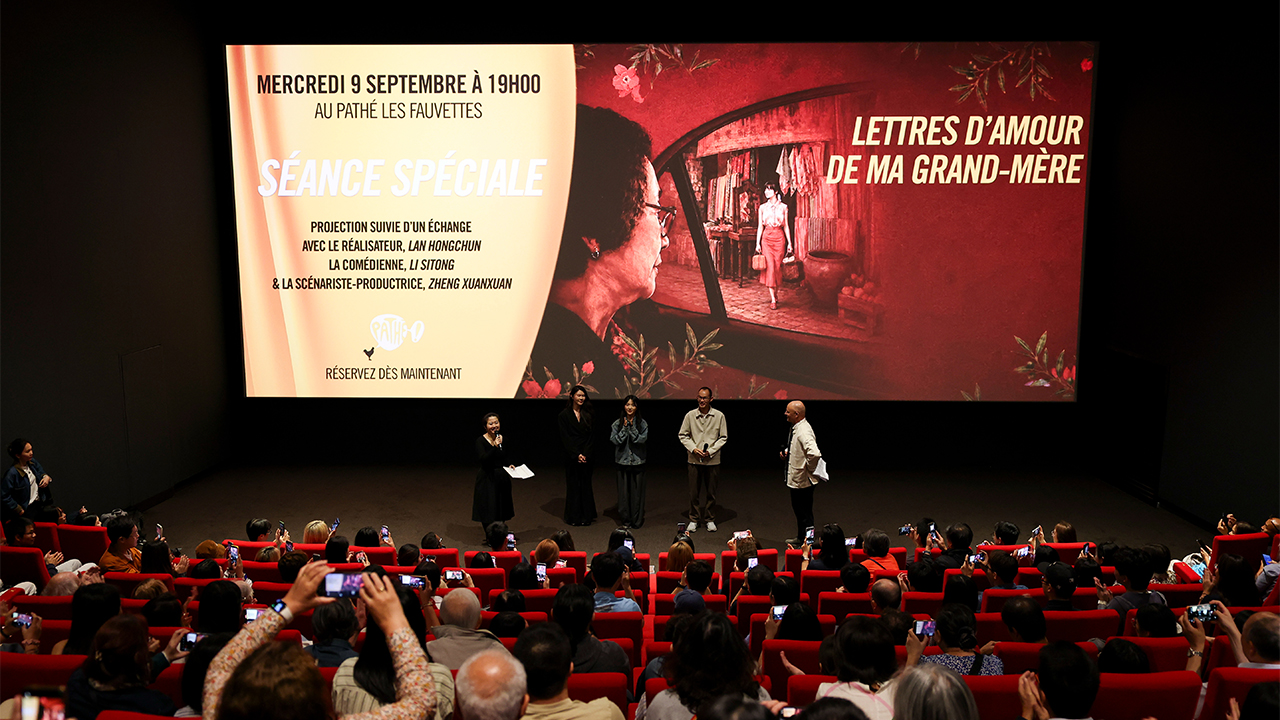
The cast and crew of Shenzhen-produced film“Dear You” meet the audience after a screening in Paris, France on Sept. 9. Photo from Xinhua
As of Sept. 30, the Shenzhen-produced film “Dear You” had grossed more than 2 billion yuan at the box office, making it one of the year’s standout domestic releases. Its success offers a glimpse of Shenzhen’s “rainforest” model of cultural development.
Over the past two years, the city has become a hub for original cultural productions, from stage plays and films to TV dramas and literary works. These efforts are supported by a low-budget-film support system that covers every stage, from scriptwriting and project pitching to filming, post-production and regulatory review.
“Shenzhen is fertile ground for artistic creation. Policymakers here have always regarded fostering creativity as vital to the development of cultural products,” said Li Yawei, chairperson of the Shenzhen Film and Television Artists Association. She attributed the steady stream of original works to the “tropical rainforest-style” cultural ecosystem the city has cultivated for film and television.
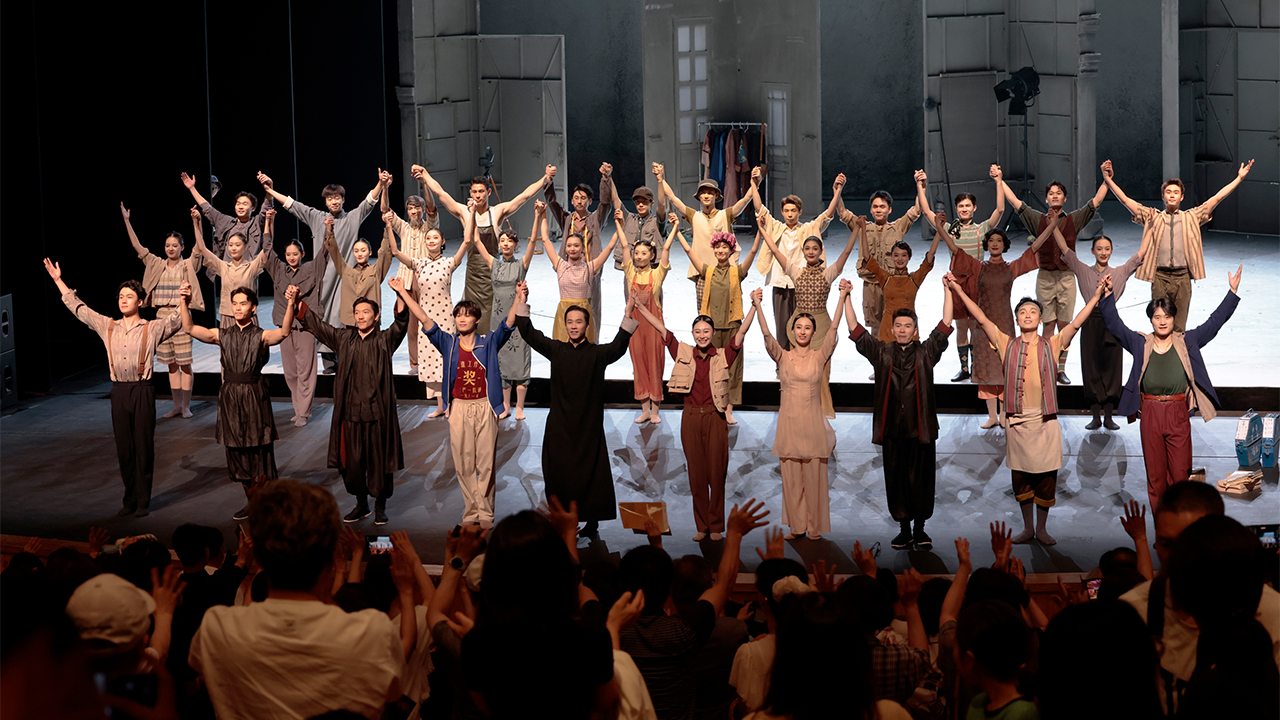
The cast members of “Wing Chun” acknowledge the audience amid standing ovations after a show in South Korea on Aug. 1. Photo by Geng Chaoyi
At the forefront of this cultural resurgence is the Shenzhen-produced dance drama “Wing Chun,” which exemplifies the city’s creative reinterpretation of traditional Chinese culture. Since its premiere in 2022, the production has earned acclaim for its emotional depth, fluid choreography and exquisite costumes. It has performed more than 330 times in 60 cities worldwide, attracting nearly 460,000 audience members. The show has become a signature cultural brand and a flagship example of Shenzhen culture reaching international audiences.
“Echoing tradition through dance and responding to the times through innovation — that is Shenzhen’s answer to the arts,” said director Han Zhen, reflecting on the production’s success.
“The pluralistic and inclusive core of Shenzhen’s ‘rainforest model’ aligns perfectly with the demands of cross-cultural dialogue we have encountered overseas,” said Chang Hongji, the lead actor in “Wing Chun.”
Shenzhen is also a leader in micro-dramas. According to a report by DataEye Drama Tracker, the city ranks second nationwide in micro-drama exports. In recent years, Shenzhen has introduced policies to support the digital creative industry and encourage original productions.
Works produced in Shenzhen are gaining recognition at home and abroad, achieving both critical acclaim and commercial success. This reflects the city’s efforts to explore a new, market-driven approach to cultural exports by drawing on its distinct strengths. It is also reshaping how the world sees the cultural vitality of this “city of innovation.”
Alongside bringing high-quality cultural works to global audiences, Shenzhen has built international platforms for cultural exchange. Launched in 2017, the Shenzhen Belt and Road International Music Festival has become one of the Greater Bay Area’s most influential cultural brands.
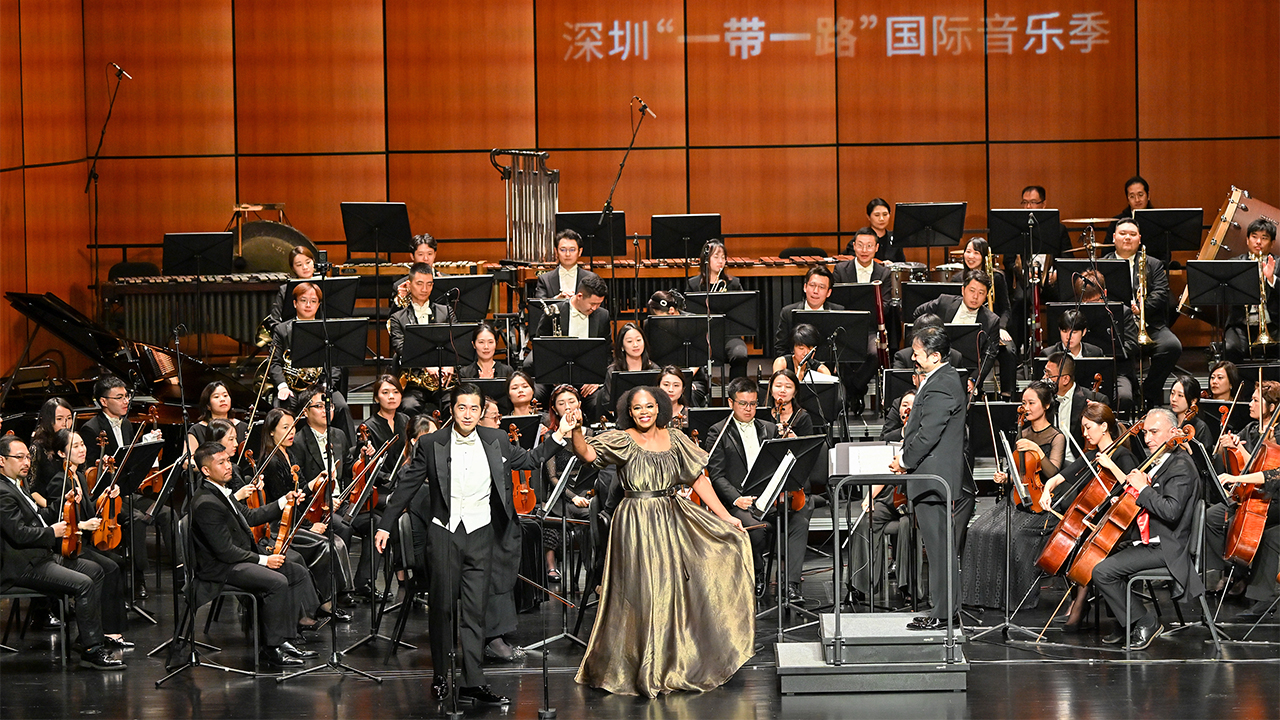
South African soprano Pretty Yende and Chinese tenor Wang Kang acknowledge the audience after a show during the 2026 Shenzhen Belt and Road International Music Festival. Photo by Hu Lei
By 2026, the festival had held six editions, attracting thousands of artists from more than 60 countries and regions and presenting nearly 200 performances. It has promoted international cultural exchange and become an important platform for showcasing the cultural strengths of Shenzhen and the GBA.
Romanian conductor Ciprian Teodorascu remarked: “Shenzhen weaves music together with technology, commerce and culture — it shows me the future of a city.” French pianist Hélène Grimaud said: “Shenzhen’s audiences are passionate. This place is becoming Asia’s music living room.”
The annual China (Shenzhen) International Cultural Industries Fair (ICIF) also brings cultural products from around the world together. More than an exhibition venue, the fair connects culture and the economy and provides an important platform for mutual learning among civilizations. Through the fair, Shenzhen-produced creative content, performances, intangible cultural heritage, games and short dramas are reaching wider audiences and amplifying the global voice of Chinese stories.
“From Shenzhen, we can reach the Greater Bay Area and beyond,” said Juergen Boos, president of the Frankfurt Book Fair, who has attended the ICIF for two consecutive years.
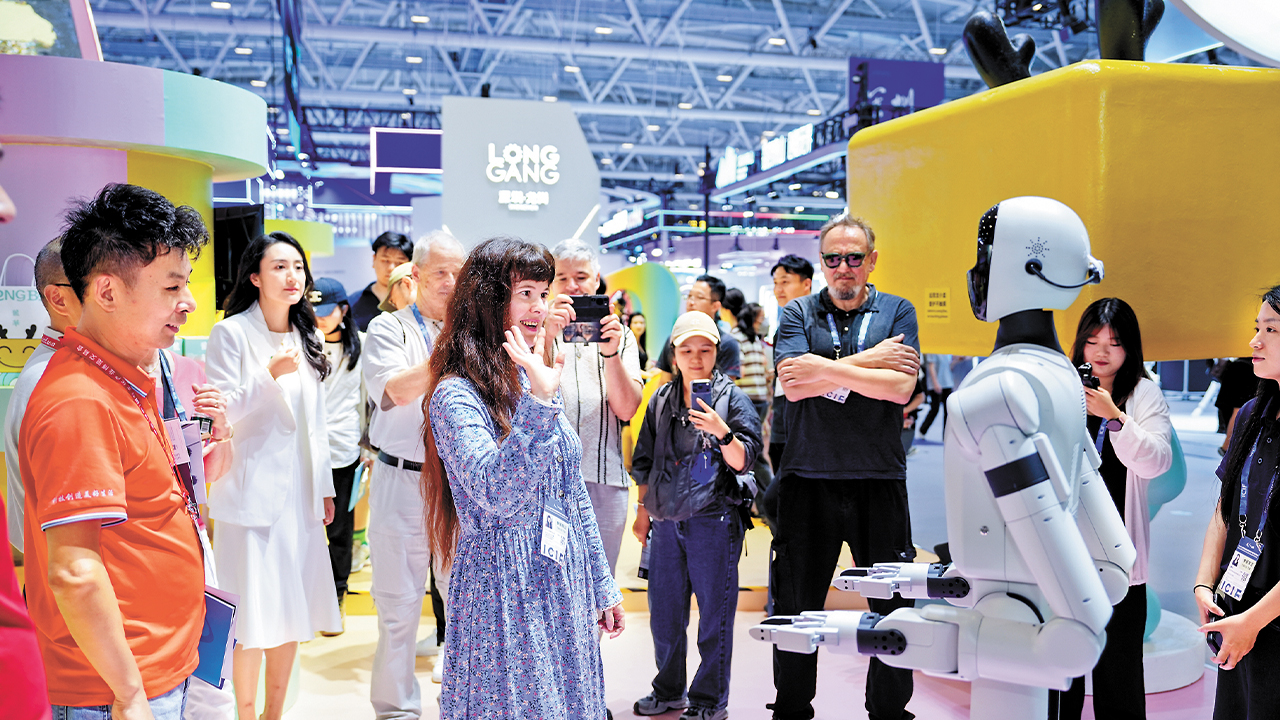
A visitor greets a robot at the 2026 China (Shenzhen) International Cultural Industries Fair in May. Photo by Cai Weize
Shenzhen continues to expand its cultural influence by hosting other international events, including Shenzhen Design Week, the Global Design Award and Shenzhen Verbier Music Festival. These platforms showcase the vitality of “Shenzhen design” and “Shenzhen creativity,” foster dialogue between Chinese culture and the world, and help make the city a gathering place for global creative talent and resources.
Meanwhile, a wave of landmark cultural facilities — including Shenzhen Bay Culture Square, Shenzhen International Art Museum, Shenzhen Natural History Museum and Qianhai Museum — has opened, providing new spaces for artistic creation and opportunities for talent to gather and collaborate. Shenzhen’s “tropical rainforest” cultural ecosystem continues to flourish.