

 Share


From two parks to 1,350: How Shenzhen brings nature closer 1350座公园,深圳让自然触手可及
Editor: Lin Jiayi | Updated: 2026-10-27
When the Shenzhen Special Economic Zone was established in 1980, the city had just two parks. More than four decades later, it has 1,350.
Across less than 2,000 square kilometers, Shenzhen now has 39 countryside parks, 206 urban parks and 1,105 community parks. The abundance of parks has earned the city the nickname "city of a thousand parks." But the real story goes beyond the numbers: in Shenzhen, nature is never far away.
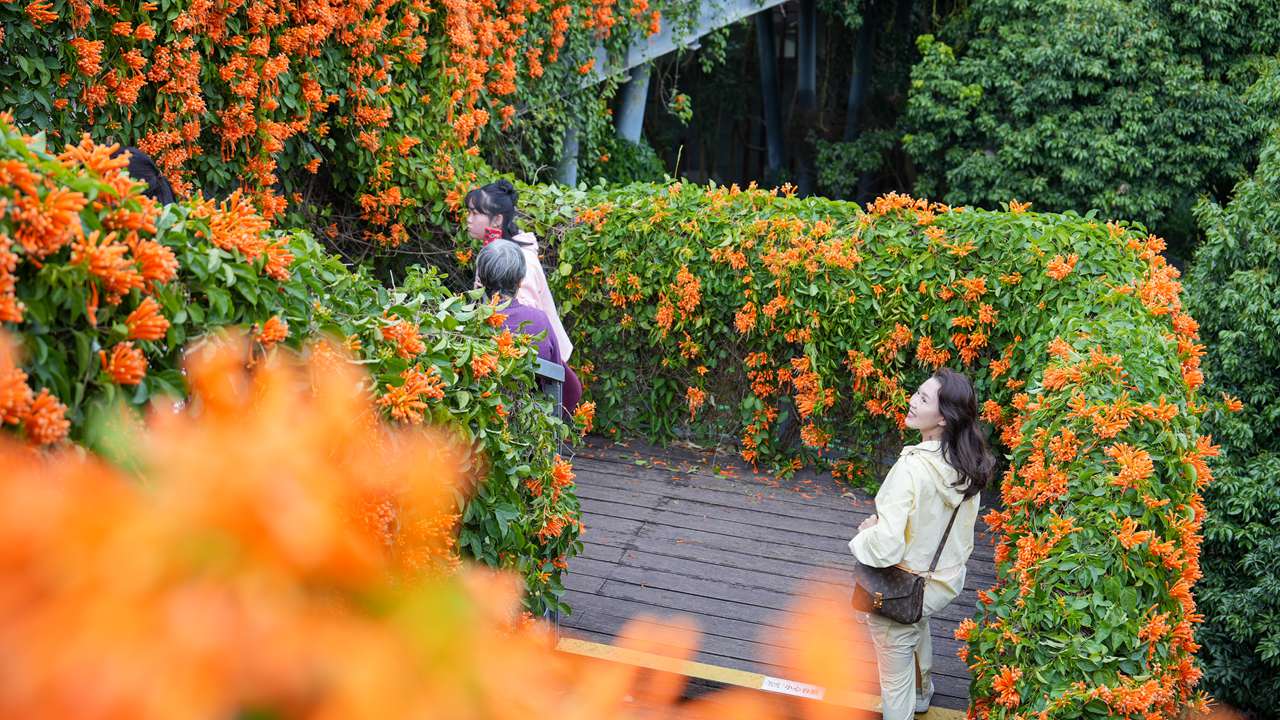
Visitors admire blooming firecracker flowers in Xiangmi Park in Futian District. Photos by Lin Jianping
A park here need not be a destination. It might be a small patch of greenery between residential buildings, discovered on a stroll downstairs. Community parks make up the vast majority of the city's parks, and some occupy just a few hundred square meters. Even so, they provide space for older residents to gather over chess games and children to play. More than 91.2% of Shenzhen's residents now live within a 500-meter service radius of parks.
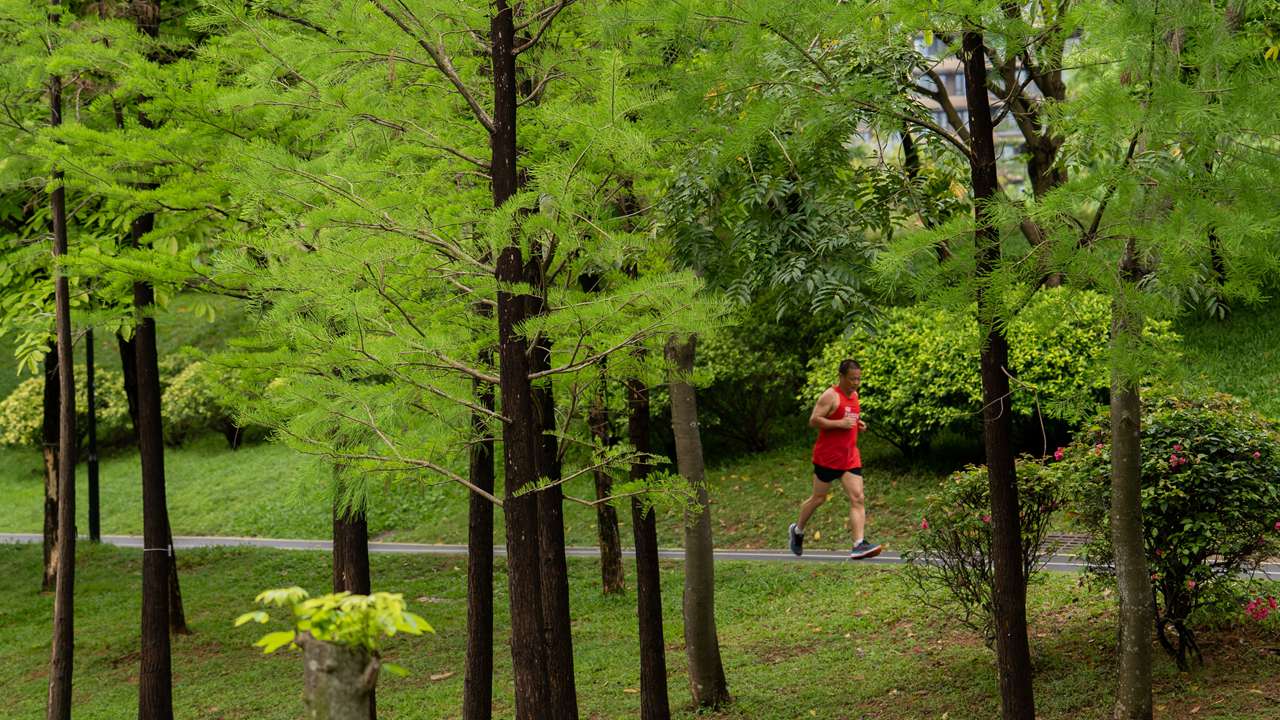
A resident jogs in Shenzhen Central Park in Futian District.
In 2020, the Shenzhen urban planning and natural resources bureau unveiled the Mountain-Sea Vistas initiative, seeking to integrate blue and green spaces with urban development through an ecological framework of "one ridge, one belt and 20 corridors." The initiative was included in the municipal government's work report that year, with systematic implementation beginning in 2022. Today, its three main routes have formed an extensive ecological network across Shenzhen.
The "one ridge" is an east-west mountain spine running through the city. At its heart is the Kunpeng Trail, whose main route extends approximately 200 kilometers across major mountain ranges, forests and lakes. Named one of China's top 10 distinctive destinations for mountaineering and outdoor sports, the trail offers hikers a rare chance to follow a continuous mountain route without leaving a major city.
The "one belt" follows Shenzhen's southern waterfront, forming a corridor along the coast. Its approximately 200-kilometer cycling route brings together a variety of seascapes. Three pedestrian and cycling bridges across Qianhai Bay have made the route more accessible: a journey that once took an hour on foot can now be completed by bicycle in just over 10 minutes.
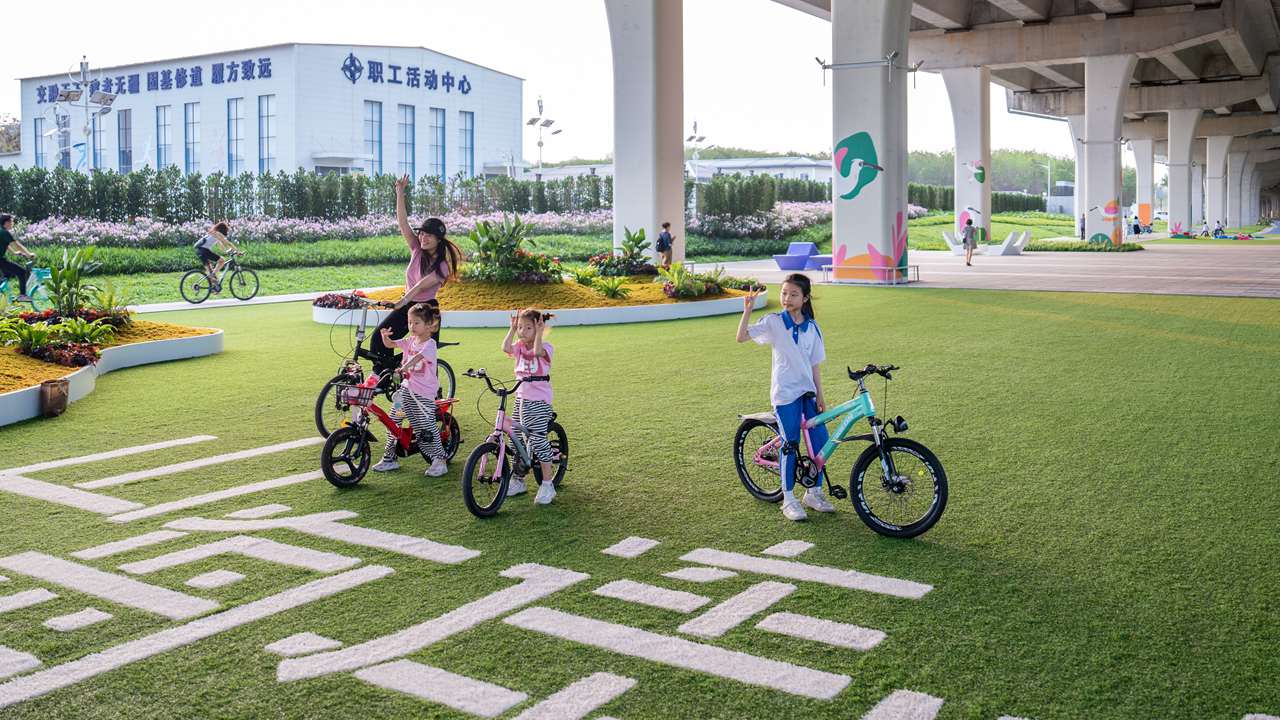
Visitors pose for a photo on a section of the Xiwan-Qianhai Bay Walking Trail, which is part of Shenzhen's Mountain-Sea Vistas initiative.
The "20 corridors" refer to 20 ecological corridors extending from the mountain spine into the urban area, linking Shenzhen Bay and Qianhai Bay, connecting mountains and forests with rivers, the sea, parks and neighborhoods.
On Aug. 3, as one of the outcomes of the 2026 APEC Ministerial Meeting on Forestry, the white paper "A City of Symbiosis: Shenzhen's Practice in Promoting Harmony Between Humanity and Nature" was officially released after being approved by the National Forestry and Grassland Administration and the CPC Shenzhen Municipal Committee and Shenzhen Municipal People's Government.
The white paper outlines plans to upgrade the Mountain-Sea Vistas initiative to version 2.0. Building on existing progress in ecological connectivity, Shenzhen will further expand its network of mountain-sea corridors, reconnect fragmented habitats and improve connections among hiking trails, riverside greenways and coastal greenways. The aim is to transform ecological spaces from areas of static protection into places that are open, accessible and shared by all, making nature easier to reach, greenery easier to experience and the natural world more interactive. In this way, access to nature can become a public benefit enjoyed by all.