

 Share


Robots and AI 机器人和人工智能
Editor: Zhang Chanwen | Updated: 2026-10-22
Last year, a robot “6S” store — a one-stop center for services such as sales, spare parts, service, surveys, solutions and leasing — opened in Shenzhen. It was billed as the world’s first of its kind and quickly became a local attraction.
Shenzhen is home to a growing number of robotics companies, including UBTECH, Honor and Leju Robot. By the end of 2025, the city had 34 publicly listed robotics companies and nine unicorns.
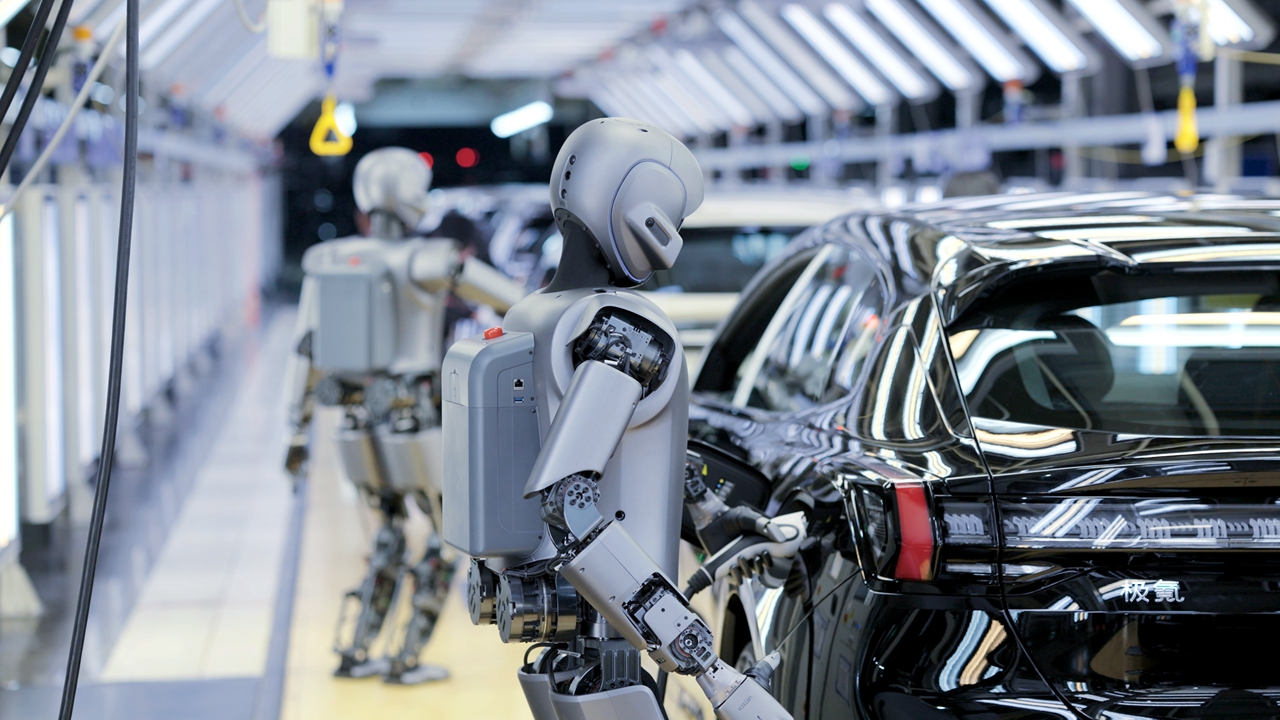
A UBTECH robot performs a task during training at the Zeekr 5G smart factory in Qianwan New Area, Ningbo, Zhejiang Province, March 2025. Dozens of the company's industrial humanoid robots carried out coordinated operations. File photo
The sector reached new highs last year. Humanoid robot production rose 83.1% from a year earlier to 343,400 units. The total output value of Shenzhen’s robotics industry exceeded 242.6 billion yuan, with some 100,000 related companies. Industrial robot output makes up roughly a quarter of the national total.
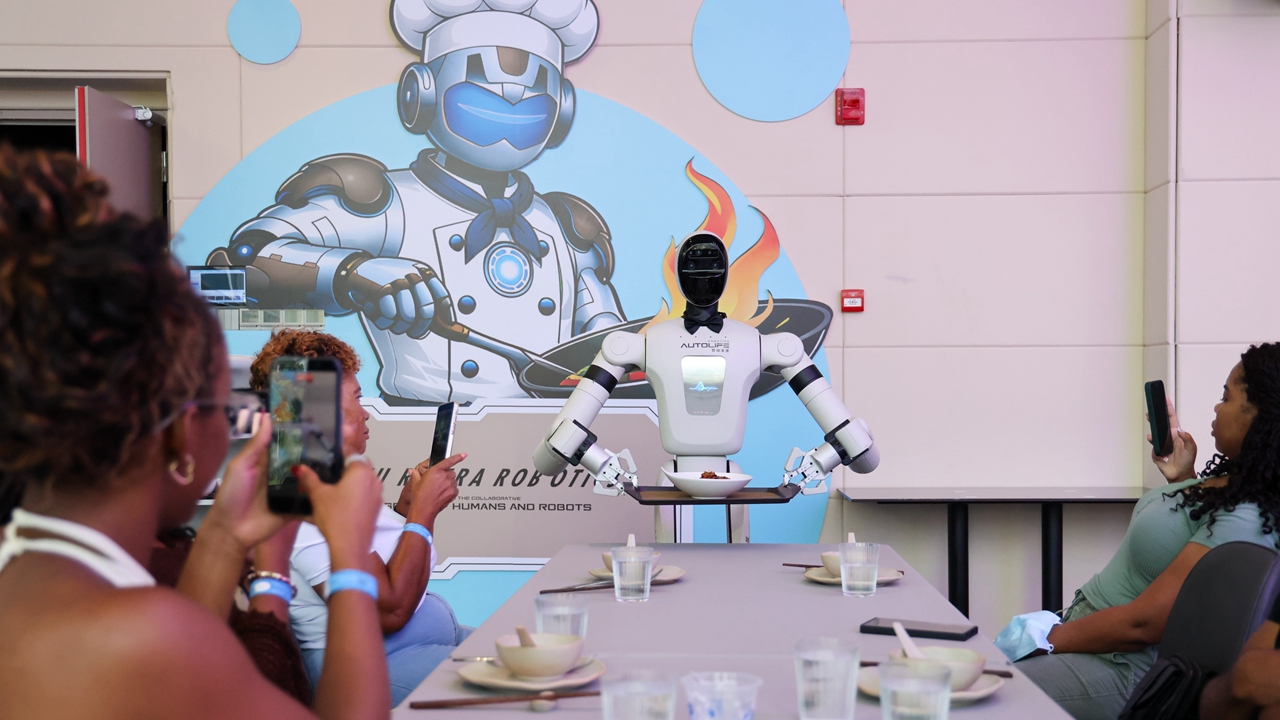
Jamaican tourists take photos of a food-delivering robot at the world's first robot 6S store in Longgang District, Shenzhen, on Aug. 4.
Shenzhen also has more than 2,600 major AI companies. The industry spans the supply chain, from AI chips, algorithms and foundation models to software and hardware applications.
The city is backing the sector with investment and policy support. Last year, it established a 10 billion yuan fund for the AI and robotics industries. This year, it introduced an “AI Plus” action plan to promote the use of AI in advanced manufacturing.
In 2025, Shenzhen’s core AI industry generated about 220 billion yuan in revenue. The output value of its AI industry cluster is expected to grow by more than 10% this year.
The city is also targeting 1 trillion yuan in smart-terminal output this year. It expects production to exceed 150 million units and plans to develop more than 50 AI-enabled terminal products in 2026.