

 Share


'Remarkable Shenzhen, visionary GBA' “在深圳遇见大湾区的未来”
Editor: Lin Jiayi | Updated: 2026-10-20
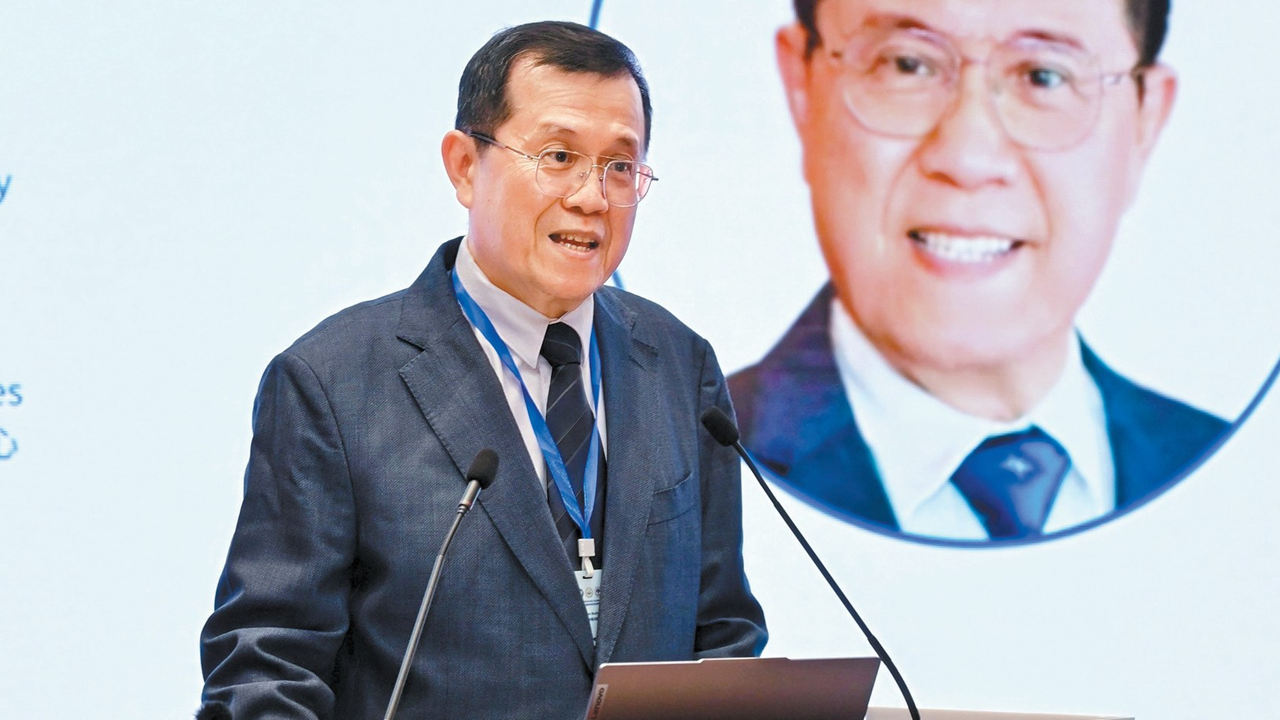
Ong Tee Keat delivers a speech at the recent APEC Econ- omies China Studies Scholars Forum in Guangzhou. File photo
Second-generation Malaysian Chinese with ancestral roots in China's Hainan Province, Ong Tee Keat witnessed the country's rapid transformation firsthand during his numerous visits as Malaysia's transport minister. Now president of the Belt and Road Initiative Caucus for Asia Pacific and chairman of the New Asia Strategic Research Center, he is also a renowned "dialect master," fluent in Mandarin, Cantonese, and Hainanese.
In an interview with Shenzhen News Group on the sidelines of the recent APEC Economies China Studies Scholars Forum in Guangzhou, Ong noted that Shenzhen's selection as the host city for APEC 2026 — making it China's third APEC city after Beijing and Shanghai — carries great significance. He added that China is expected to stage about 300 "marathon style" events across multiple cities this year and has already begun delivering substantive, institutional and pragmatic outcomes.
"The main reason Shenzhen was chosen is that it has become a symbol of China's emerging technologies," Ong said. "It has transformed in just a few decades into a world-leading technology hub — that is truly remarkable." He emphasized that hosting the APEC gathering in Shenzhen serves a dual purpose: showcasing a future-oriented China with particular foresight in technology while anchoring the Guangdong-Hong Kong-Macao Greater Bay Area (GBA) into the broader push for Asia-Pacific economic integration.
Ong described the GBA as a unique global asset, noting that its visionary configuration — with the Pearl River Delta's production capacity, Shenzhen's high tech edge, Hong Kong's financial clout, and Macao's appeal as a world-class tourism hub — is rarely matched anywhere else. The Asia-Pacific region boasts the world's highest concentration of semiconductor manufacturing, alongside rapidly expanding data-center clusters and world-leading digital innovation.
Ong noted that China has long championed an Asia-Pacific community with a shared future, recognizing that APEC's path now extends far beyond the tariff cuts and trade facilitation envisioned in the past. Today, emerging drivers such as AI and the digital-energy transition have evolved from "next-generation issues" to core items on the APEC agenda.
He highlighted the ASEAN Digital Economy Framework Agreement — the world's first comprehensive regional digital framework scheduled for signing at the ASEAN Summit this November — as a potential game- Thursday June 25, 2026 changer. Once the agreement takes effect, the ASEAN digital market — home to 689 million people — is projected to grow from US$263 billion in 2024 to US$2 trillion by 2030.
"This agreement could set the benchmark for the future digital economy," Ong said. Estimates that once sat at US$1 trillion have since doubled, reflecting immense regional confidence. He noted that while AI and biotech are top of mind, the priority remains leveraging these tools to fuel productivity and competitiveness — an effort he expects to see bolstered by deeper China-ASEAN ties.
Beyond trade and tech, Ong highlighted the importance of "soft" connectivity. During the forum, he watched the Shenzhen-produced film "Dear You," which explores the nostalgia of overseas Chinese. The film's depiction of qiaopi — letters and remittances sent home by earlier generations of overseas Chinese — resonated deeply with Ong, who recalled his own family's history of sending lard back to their ancestral village.
"Many emotions cannot be fully captured with words," Ong said. He shared his plan to take his children and grandchildren to see the film when it is released in Malaysia, calling it a vital lesson on their heritage and the lives of their ancestors.
"The main reason Shenzhen was chosen is that it has become a symbol of China's emerging technologies. It has transformed in just a few decades into a world-leading technology hub — that is truly remarkable."
Remarks Highlights
Ong Tee Keat
President of the Belt and Road Initiative Caucus for Asia Pacific, chairman of the New Asia Strategic Research Center
Shenzhen represents China’s technological rise. Ong sees Shenzhen’s transformation into a leading technology hub in just a few decades as remarkable. Hosting APEC 2026 in the southern Chinese tech hub will showcase China’s forward-looking approach to technology.
The Guangdong-Hong Kong-Macao Greater Bay Area (GBA) is a distinctive global asset. GBA’s strengths complement one another: the Pearl River Delta’s manufacturing capacity, Shenzhen’s technology sector, Hong Kong’s financial expertise, and Macao’s tourism industry. He believes this combination can help connect the region more closely with Asia-Pacific economic integration.
APEC’s agenda has expanded beyond traditional trade. While tariff reduction and trade facilitation remain relevant, AI, digital development, and the digital-energy transition are now central issues for regional cooperation.
The ASEAN Digital Economy Framework Agreement could be transformative. Ong expects it to provide a benchmark for digital cooperation and help unlock the potential of ASEAN’s large and fast-growing digital market. He also sees closer China–ASEAN ties as a way to strengthen productivity and competitiveness through technologies such as AI and biotechnology.
Cultural connections matter alongside economic ones. The film Dear You and its portrayal of qiaopi — letters and remittances sent by overseas Chinese to their families — reminded him of his own family’s history. He hopes to share the film with his children and grandchildren as a way of passing on their heritage.