
 Share


APEC Basics APEC速览
Updated: 2026-10-20
APEC Logo
Officially introduced in 1991, the APEC logo depicts a green, blue, and white globe. It symbolizes both the regional economic cooperation body and the broader hopes of the Asia-Pacific people. The Pacific side of the globe represents APEC's member economies. Green and blue reflect aspirations for prosperity, health, and well-being; white signifies peace and stability. The shaded edge conveys the region's dynamic growth potential, while the letters "APEC" stand in white at the center.
Decoding the 'informal' APEC
Shenzhen will host the 33rd APEC Economic Leaders' Meeting this November. Given its significance, why is the summit described as "informal"? The term dates to the first leaders' meeting in 1993, when the then-host, the U.S., proposed elevating APEC from ministerial gatherings to a leaders' forum. Because the proposal lacked unanimous support, the meeting was labeled "informal" — a designation that has since become customary. This informality is embedded in APEC's institutional design: Its agenda is deliberately flexible, enabling leaders to hold open discussions and offer broad strategic guidance without fixed topics or formal protocols. APEC outputs are initiatives rather than legally binding agreements. Commitments rely on voluntary implementation, allowing members to pursue cooperation according to their development stages and national circumstances.
APEC Structure
APEC operates within a five-tier framework: the Leaders' Meeting, Ministerial Meetings, Senior Officials' Meetings, committee and working-group meetings, and the Secretariat. APEC's core agenda: As a forum dedicated to fostering regional economic cooperation, APEC primarily addresses global and regional economic issues. Its core agenda includes trade and investment liberalization and facilitation, regional economic integration, connectivity, economic structural reform and innovation, strengthening the global multilateral trading system, and promoting economic and technical cooperation for capacity building.
APEC Ministerial Meetings
The APEC Ministerial Meetings comprise an annual Joint Ministerial Meeting, held prior to the APEC Economic Leaders' Meeting, and various Sectoral Ministerial Meetings, which convene on a regular or ad-hoc basis to address areas including trade, finance, small and medium enterprises, energy, ocean affairs, mining, telecommunications, tourism, food security, forestry, structural reform, transportation, human resources, women's economic participation, and health.
APEC Business Travel Card
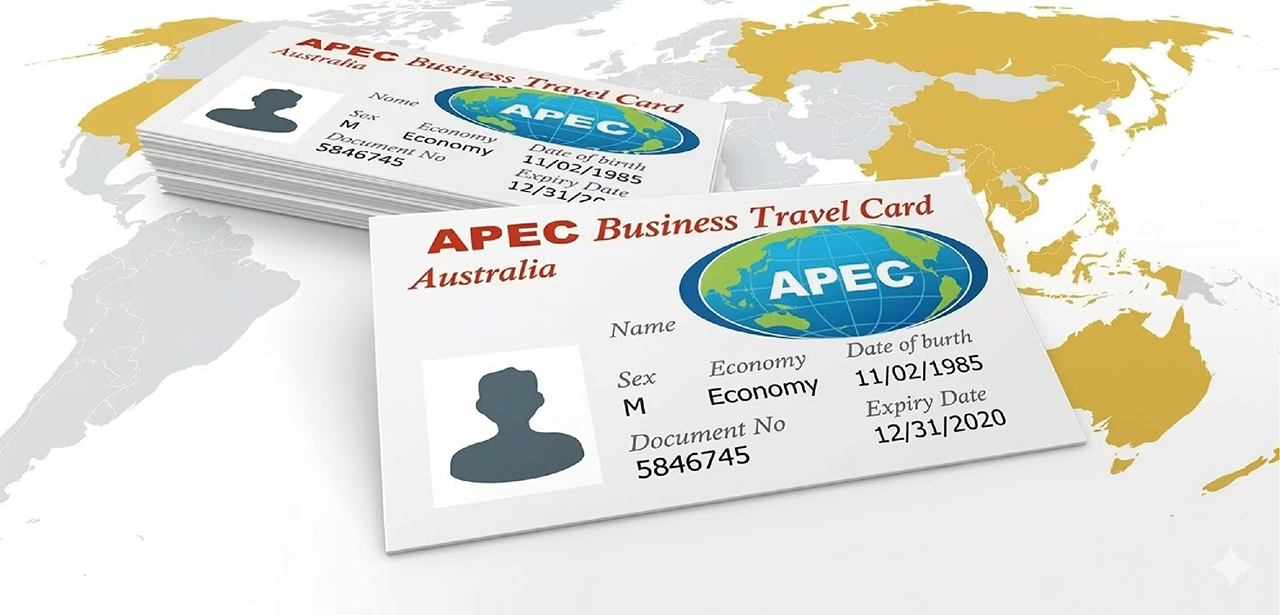
The APEC Business Travel Card (ABTC) is a travel document issued to business travelers and entrepreneurs from APEC member economies, designed to facilitate seamless and efficient cross-border travel within the Asia-Pacific region. Valid for five years, the ABTC allows cardholders to enjoy expedited visa processing and access to dedicated immigration lanes at participating airports, significantly reducing travel time and administrative burdens. It also permits multiple entries, with each stay lasting at least 60 days.